I considered myself to be a good person. I helped people in need. I was a law-abiding citizen. I was kind, honest and trustworthy. I paid my taxes and followed the rules.
Yet, before the age of 40 I had already experienced four concussions, melanoma, three car accidents, mysterious health issues and years of mental and emotional abuse. Why did all of that happen to me?
Was it just the luck of the draw or karma? Or maybe I wasn’t such a good person after all.
My story is not unique.
We all know kind and generous people who died tragically young or who have experienced heart-wrenching illness, atrocity, loss or pain. When we hear of such tragedy – or experience it for ourselves – it’s normal to wonder, “why do bad things happen to good people?”
Part of the problem lies in the question itself. “Good” and “bad” are highly subjective concepts. They are relative terms whose definition changes constantly, person by person, even minute by minute. We think something bad has happened to us, then years later we realize that thing was actually a blessing in disguise.
When we label things as good and bad, we do so from a very small, limited viewpoint. How can we be sure that the “bad” thing that happened wasn’t just the thing to redirect a person’s life to a more spiritual path? Maybe that “good” person had a karmic debt to pay, and her being a good person was precisely what gave her the strength and resilience to clear that debt.
We also can’t say with certainly that someone is a “bad” person. We may not like their behavior or actions, but that doesn’t have anything to do with a person’s essence or core. The same applies to ourselves.
The truth is, seeing things in terms of good and bad is a trap.
It’s a trap that keeps us in a reductionist, judgmental, us-versus-them world of separation. In that world, there are victims and perpetrators, good and evil. Within that worldview, we can’t explain why bad things happen to good people. Instead, we assume disaster can strike us at any time in the form of an accident, illness, crime or disease. When we view the world this way, we become powerless.
The good news is, there is another choice. We can step out of the separation worldview of good and bad, us versus them, and embrace a higher understanding. We can transform ourselves to a higher level of awareness and a more expanded state of aliveness.
That transformation may not be quick or easy. Often times understanding doesn’t come until months or years later. Sometimes we never fully understand why something happened. It’s all part of the mystery of being human.
So, how do we step into a more empowering view of the world – one of unity, peace and understanding? Three ways: 1) acceptance, 2) reframing and 3) redirecting.
Acceptance
Acceptance is acknowledging to ourselves that something happened. We don’t have to know why it happened and we don’t have to like it. But since that thing already occurred, it makes sense for our mental and emotional health to acknowledge and accept that it happened. When we fight against that thing or pretend that it didn’t occur, we invite stress and suffering into our lives.
“The pain that you create now is always some form of nonacceptance, some form of unconscious resistance to what is.” – Eckhart Tolle
There is great power in stepping back from a situation and considering how our thoughts, beliefs and actions contributed to it.
Reframing
We are ultimately the meaning-makers of our experiences. It is us – you and me – who put meaning on things. We interpret life through our own unique filters and experiences and then decide what those experiences mean.
What if that accident or illness catapulted you to do the inner work required to stand as a beacon of light for others? What if the trauma you experienced was an invitation to embrace and develop your inner life? What if each of us knowingly agrees to these experiences before we incarnate on this planet?
Two people could have the same thing happen to them and experience it quite differently. Our state of being, whether positive or negative, comes from our reaction to things and the meaning we give them. The reaction and the meaning are supplied by us.
That’s great news. It means we can change the story we tell ourselves. We can decide why something happened. We can draw new conclusions from our life experiences and choose ones that support our own peace and happiness.
Redirecting
Rather than looking outward to a world of victim and perpetrator, good and bad, we can look within. That’s where our authentic power lies. The truth abides within each of us.
Looking within means shifting our focus from the external, physical world of matter to the internal world of essence or being. We can do this through meditation, stillness, prayer, movement or by spending unstructured time in nature. We can also do this by developing our intuition – our internal guidance system for knowing what is true.
As we work on ourselves and raise our level of awareness, we are able to widen our view and see things from multiple perspectives. So when something seemingly bad happens, we can more quickly see the reasons and the hidden opportunities within it.
What if everything that happens to us and to the world around us is actually for us? What if every event, person, circumstance and tragedy is a wakeup call for our own empowerment, and an invitation to step into a greater version of ourselves?
What might the world look like – and who might we become – if we answered that call?
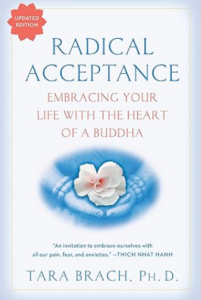
Learn more about the power of acceptance, reframing and redirecting with these transformative books:
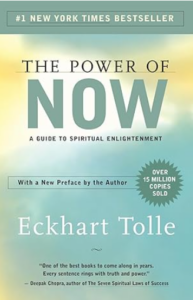
The Power of Now by Eckhart Tolle

Unplug Your Robot: The Secret to Lasting Happiness by Karin Kiser